
Large Format Tiles vs Small Format Tiles: Which Size Is Right for Your UK Home?
April 20, 2026
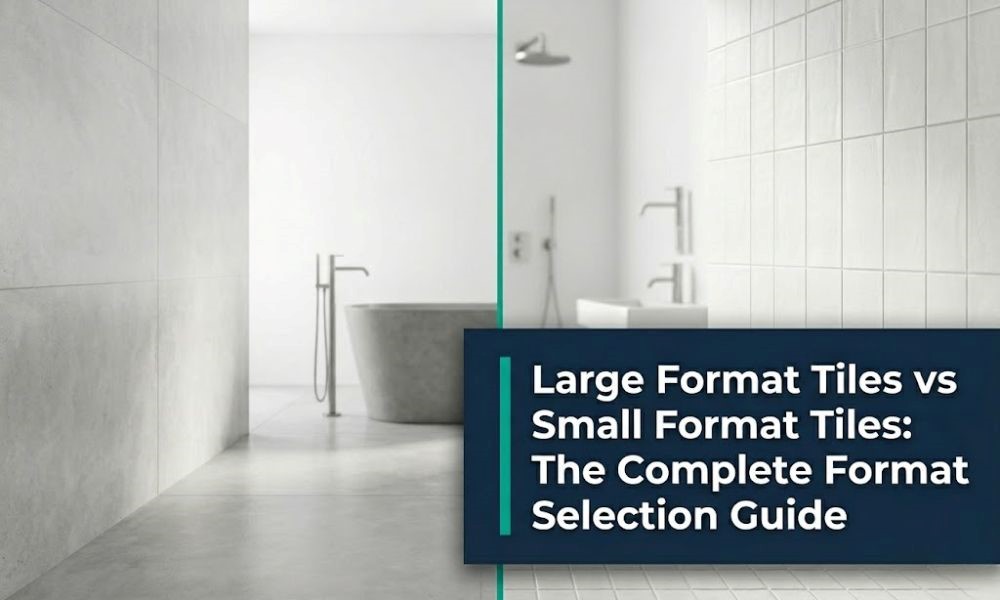
Tile size is one of those decisions that shapes everything else in a room. Get it right, and the space feels exactly as you intended. Get it wrong, and even the most carefully chosen colour or finish can look off. This guide breaks down the practical differences between large format tiles and small format tiles, what each one does well, and how to decide which suits your project.
What Are Large Format Tiles?
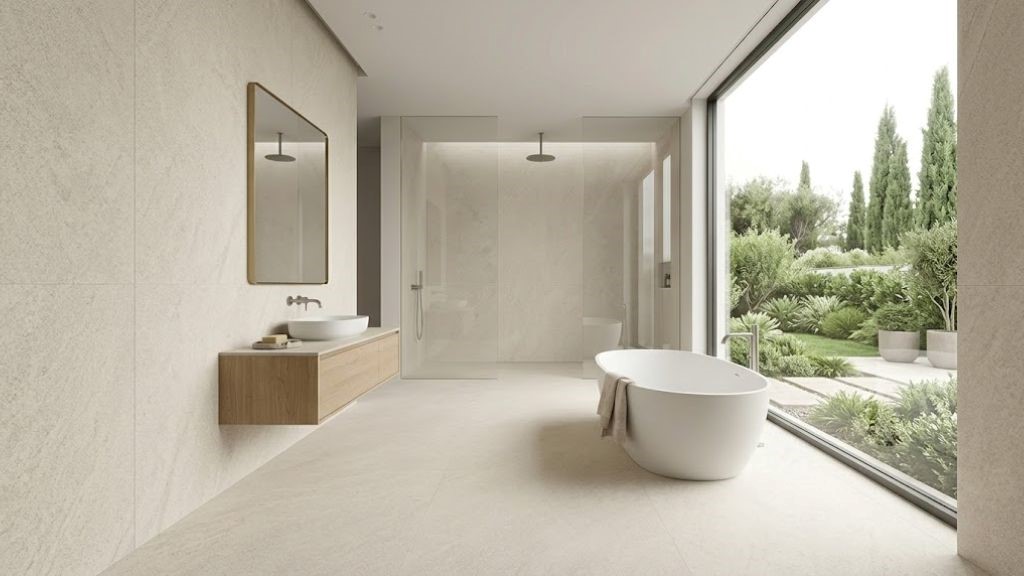
Product: Beige Stone Large Format Tile from Tile Basket
Large format tiles are generally any tile with at least one side measuring 60cm or more. In practical terms, that includes formats like 60x60cm, 60x90cm, 60x120cm, 80x80cm, 80x160cm, and 120x120cm. They have become the dominant choice in modern UK interiors over the past decade, particularly for open-plan living areas, kitchen floors, and contemporary bathrooms.
The defining characteristic is fewer grout lines. A room tiled in 120x120cm slabs will have a fraction of the joints you would see with a smaller tile, which produces a cleaner, more continuous surface across the floor or wall.
What Are Small Format Tiles?
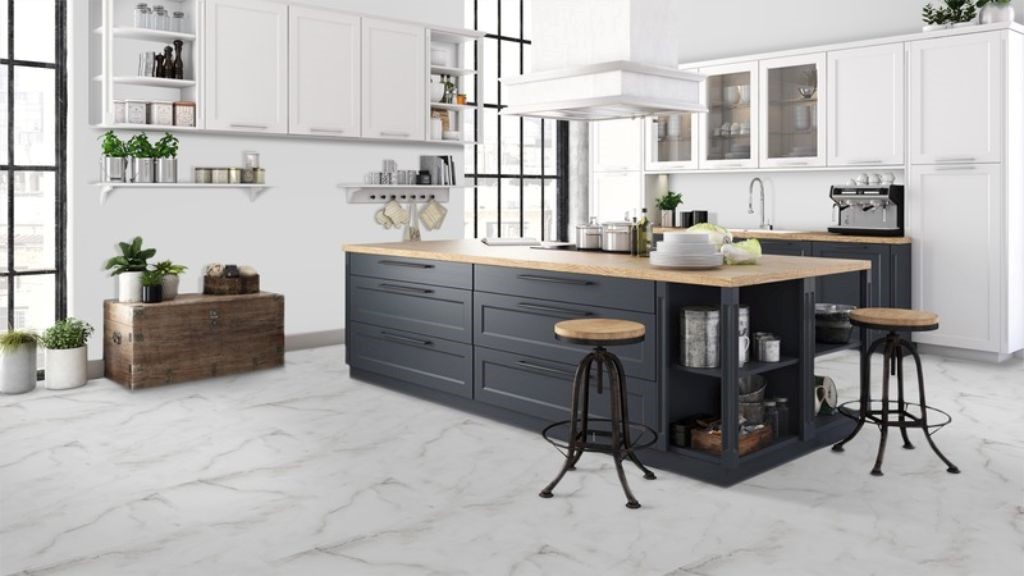
Product: Dolmen Grey Matt Small Format Tile from Tile Basket
Small format tiles typically measure under 30cm on each side, with popular formats including 10x10cm, 15x15cm, 20x20cm, and 30x30cm. Metro tiles, mosaics, hex tiles, and penny rounds all fall into this group.
They suit projects where texture, pattern, and detail are the priority rather than a streamlined floor surface. A wet room shower tray, a kitchen splashback with a herringbone layout, or a traditional cloakroom all benefit from a smaller format that allows the design to play out properly. The 30x60cm sits in the middle ground and works well on bathroom walls and kitchen splashbacks, where you want some visual presence without going into full large format territory.
Large Format Tiles vs Small Format Tiles: Key Differences
The table below summarises the main practical differences between the two formats:
| Large Format Tiles | Small Format Tiles | |
| Grout lines | Minimal | Frequent |
| Room feel | More spacious | More textured and detailed |
| Best use | Floors, large feature walls | Shower trays, splashbacks, borders |
| Installation | Requires a skilled fitter | Easier to handle and cut |
| Cleaning | Quicker to wipe down | More grout joints to maintain |
| Cost per m² | Higher per tile, fewer needed | Lower per tile, more tiles needed |
Neither is universally better. The right choice depends on the room, the layout, and what the surface needs to do.
Benefits of Large Format Tiles
Makes rooms look bigger:
Large tiles have fewer grout lines, so the floor looks more open and less busy. This helps small UK rooms feel more spacious.
Cleaner and more modern look:
The smooth, continuous surface gives a neat and modern finish, especially in kitchens and bathrooms.
Easier to clean:
With fewer joints, there’s less space for dirt and moisture to collect. Cleaning becomes quicker and simpler.
Great for underfloor heating:
Large porcelain tiles hold and spread heat well, making them a good choice for underfloor heating systems.
Perfect for open-plan spaces:
Using the same large tile across connected areas (like the kitchen and living room) creates a seamless flow without breaks.
Benefits of Small Format Tiles
More design flexibility:
Small tiles are great for creating patterns like herringbone, checkerboard, or basketweave. They give you more freedom to be creative with your layout.
Ideal for detailed areas:
Because each tile is smaller, you can build more interesting and decorative designs that stand out.
Works well on uneven or curved surfaces:
Small tiles can easily follow curves and slopes, making them perfect for shower floors, niches, and rounded walls.
Easier to install in tricky spaces:
They don’t need as many complex cuts as large tiles when working around edges or tight corners.
Better for uneven floors or walls:
If the surface isn’t perfectly flat, small tiles adjust better and reduce the risk of uneven fitting.
Perfect for traditional and period homes:
Smaller tiles suit classic designs like Victorian patterns, mosaics, and decorative borders, keeping the look authentic.
Which Size of Floor Tiles Is Best?
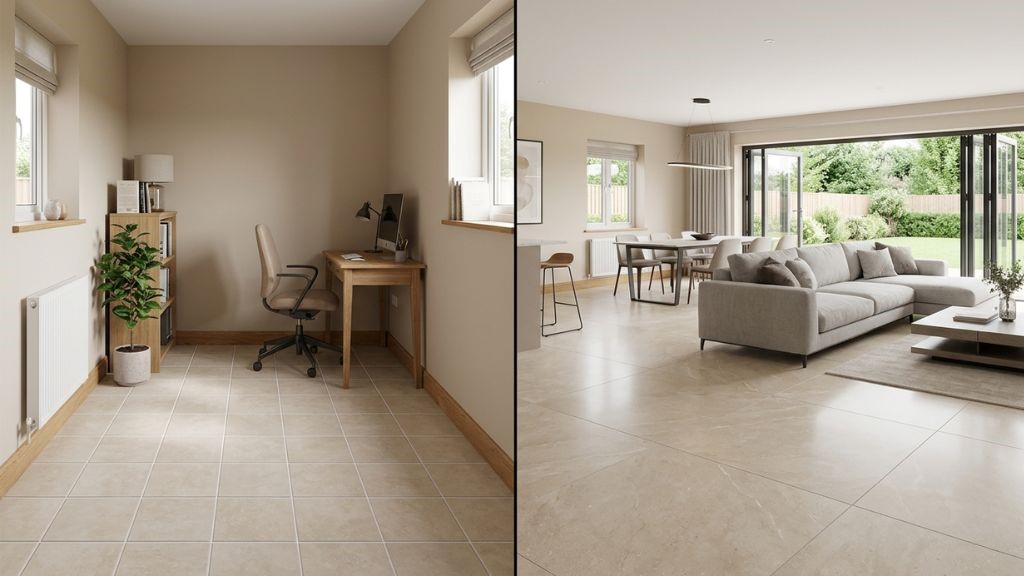
There is no single answer, but a few rules of thumb work well in practice:
- For rooms over 12 square metres, a 60x60cm tile or larger will generally look better because the scale is proportionate to the space.
- For rooms under 8 square metres, a large slab can feel overwhelming, particularly if the cuts along the edges are very narrow.
- Long, narrow hallways benefit from a 30x60cm or 60x120cm tile laid lengthways, which creates the impression of more depth.
- Square rooms in the 3x3m range suit a 60x60cm in a straight lay or a 30x60cm in a brick bond pattern.
- Large format tiles need a very flat subfloor, typically within a 3mm tolerance over 3 metres. If the subfloor is old screed or uneven boards, it needs levelling first.
When you buy floor tiles online, Tile Basket lets you order samples before committing, so you can check the size and finish against your actual space before placing a full order.
Where to Use Large Format Tiles in Your Home
Open-Plan Living Rooms and Hallways
Large format floor tiles work particularly well in open-plan living areas and entrance halls, where continuity across a wide space has the most visual impact. An 80x80cm or 120x120cm porcelain in a light stone or concrete look keeps the floor feeling cohesive even in a busy household. If you are looking to buy living room tiles in UK, the 80x80cm and 60x120cm formats are among the most popular for exactly this reason.
Kitchen Floors
Modern kitchen designs almost always benefit from a large format floor tile. The clean lines suit contemporary cabinetry, and there is less grout to trap food debris or cooking splashes. A 60x60cm matt porcelain is a solid baseline; step up to 60x120cm or 80x80cm for a more premium result. Tile Basket stocks a wide range of tiles you can buy kitchen tiles online, with options that suit both open-plan and galley kitchen layouts.
Bathroom Floors and Feature Walls
In larger bathrooms, a 60x60cm or 60x90cm floor tile produces a sense of space that smaller formats cannot match. Paired with a matching large format wall tile in a lighter colour, it works well in en-suites and family bathrooms alike. If you are looking for bathroom tiles in London or across the UK, Tile Basket carries formats up to 120x120cm that are suitable for full wet room installations.
Garden Patios and Outdoor Spaces
Large format outdoor tiles in 60x60cm or 80x80cm give a patio or terrace a more considered finish than smaller paving formats, and they are faster to lay over a large area. When browsing outdoor tiles online, check that the tile carries a suitable R-value slip rating for exterior use. All tiles in Tile Basket’s outdoor range are rated for external conditions, including frost resistance.
Where to Use Small Format Tiles in Your Home
Shower Enclosures and Wet Rooms
The floor of a shower enclosure needs a fall towards the drain, which means the surface is not flat. Mosaic sheets or small square tiles follow this gradient far more cleanly than large slabs. A 10x10cm or mosaic format also provides more grout lines, which add grip underfoot on a wet surface.
Kitchen Splashbacks and Walls
A metro tile, a small square ceramic, or a 10x20cm tile on a kitchen splashback adds texture and character without competing with a large format floor. Small format wall tiles are easy to keep clean and allow for layouts such as brick bond or herringbone that give the wall its own visual interest.
Cloakrooms and Compact Bathrooms
In a cloakroom or small bathroom under 4 square metres, a large format floor tile often results in very narrow cuts against the walls, which looks untidy. A 20x20cm or 30x30cm tile lies more cleanly in a tight space and allows for patterns that add interest without making the room feel cluttered.
Decorative Borders and Feature Panels
Borders, friezes, and mosaic feature panels are almost always in small format. They work as a visual break between wall and floor tiles or as a frame around a shower niche or bath panel, adding a detail that a large slab simply cannot achieve at that scale.
How to Choose the Right Tile Size for Your Project
Start with the room dimensions. Measure the space and work out what the cut tiles at the perimeter would look like in a given format. If the cuts are less than half a tile wide on two opposite walls, either centre the layout carefully or reconsider the format.
Think about the substrate. Large-format tiles need a very flat, well-bonded base. If you are tiling over an older floor or a boarded subfloor, a smaller format is more forgiving and less likely to result in lippage or hollow spots.
Consider the overall look you are going for. If you want a calm, contemporary surface with minimal visual noise, large format is almost always the right answer. If pattern, texture, and detail matter more than simplicity, small format gives you the tools to achieve that properly.
And if you are not sure, order samples. Laying two or three tiles in your actual space, in your actual light, is worth more than any amount of research online.
For a more in-depth breakdown of materials, finishes, and styles, take a look at our guide: The Complete Tile Selection Guide for UK Homes
Frequently Asked Questions
Are large format tiles better than small tiles?
Not necessarily. Large tiles are great for creating a spacious, modern look, while small tiles are better for detailed designs and tricky areas. The best choice depends on your room and style.
Do large tiles make a room look bigger?
Yes, large format tiles can make a room appear bigger because they have fewer grout lines, creating a more open and seamless surface.
Where should you use small format tiles?
Small tiles work best in areas like shower floors, splashbacks, and compact bathrooms where detail, grip, or flexibility is needed.
Are large tiles good for underfloor heating?
Yes, large porcelain tiles are one of the best options for underfloor heating as they conduct and retain heat efficiently.
Which tile size is best for small rooms?
It depends on the layout, but medium or small tiles often work better in very compact spaces to avoid awkward cuts and improve the overall finish.
Can you mix large and small tiles in one space?
Yes, combining both can work really well. For example, you can use large tiles on the floor and small tiles for feature walls or splashbacks to add contrast and interest.
Shop Tiles at Tile Basket
Tile Basket is the best tile company in the UK for both large and small format porcelain tiles, with sizes ranging from 30x60cm up to 120x120cm. Browse the full range and buy floor tiles online, shop for kitchen tiles, find bathroom tiles, browse living room tiles, or order outdoor tiles online with fast delivery across the UK. Contact the team if you need advice on the right format for your space.