
Best Tiles for Underfloor Heating: A Complete UK Guide
March 18, 2026
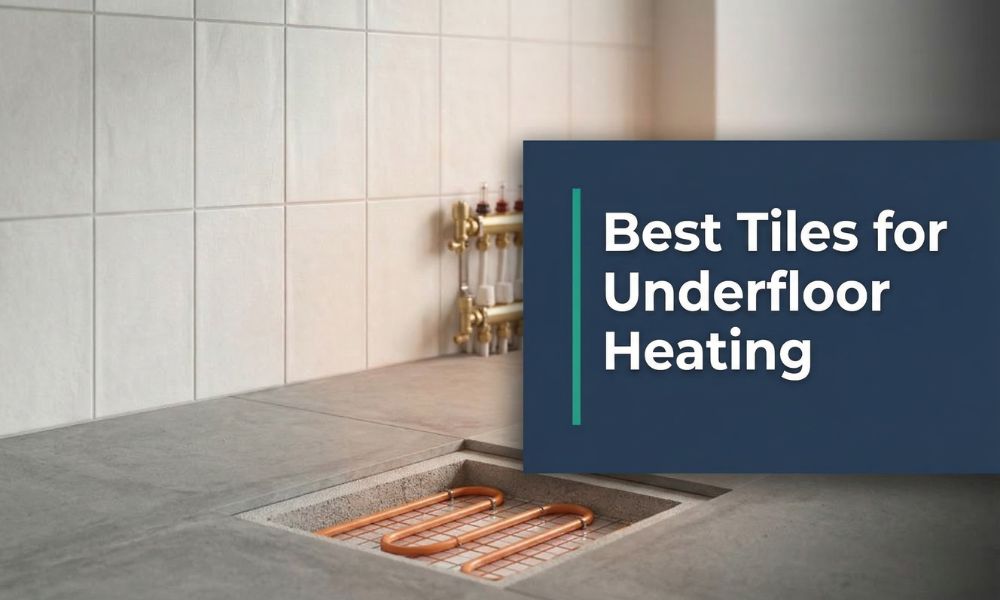
Underfloor heating and tiles are one of the most effective combinations in home design. Unlike most other floor coverings, tiles conduct and retain heat naturally, making them the ideal surface to sit above a UFH system. They warm up quickly, distribute heat evenly, and stay comfortable underfoot for hours after the system has cycled off.
But not every tile performs equally well with underfloor heating, and making the wrong choice can affect both the efficiency of your system and the longevity of your floor. This guide covers everything you need to know: which tile materials work best, how porcelain and ceramic compare, what sizes and finishes to choose, and how to tile onto a UFH system correctly.
As trusted tile suppliers across the UK, Tile Basket stocks a wide range of porcelain and ceramic tiles specifically suited to underfloor heating applications, with transparent pricing per square metre and fast delivery nationwide.
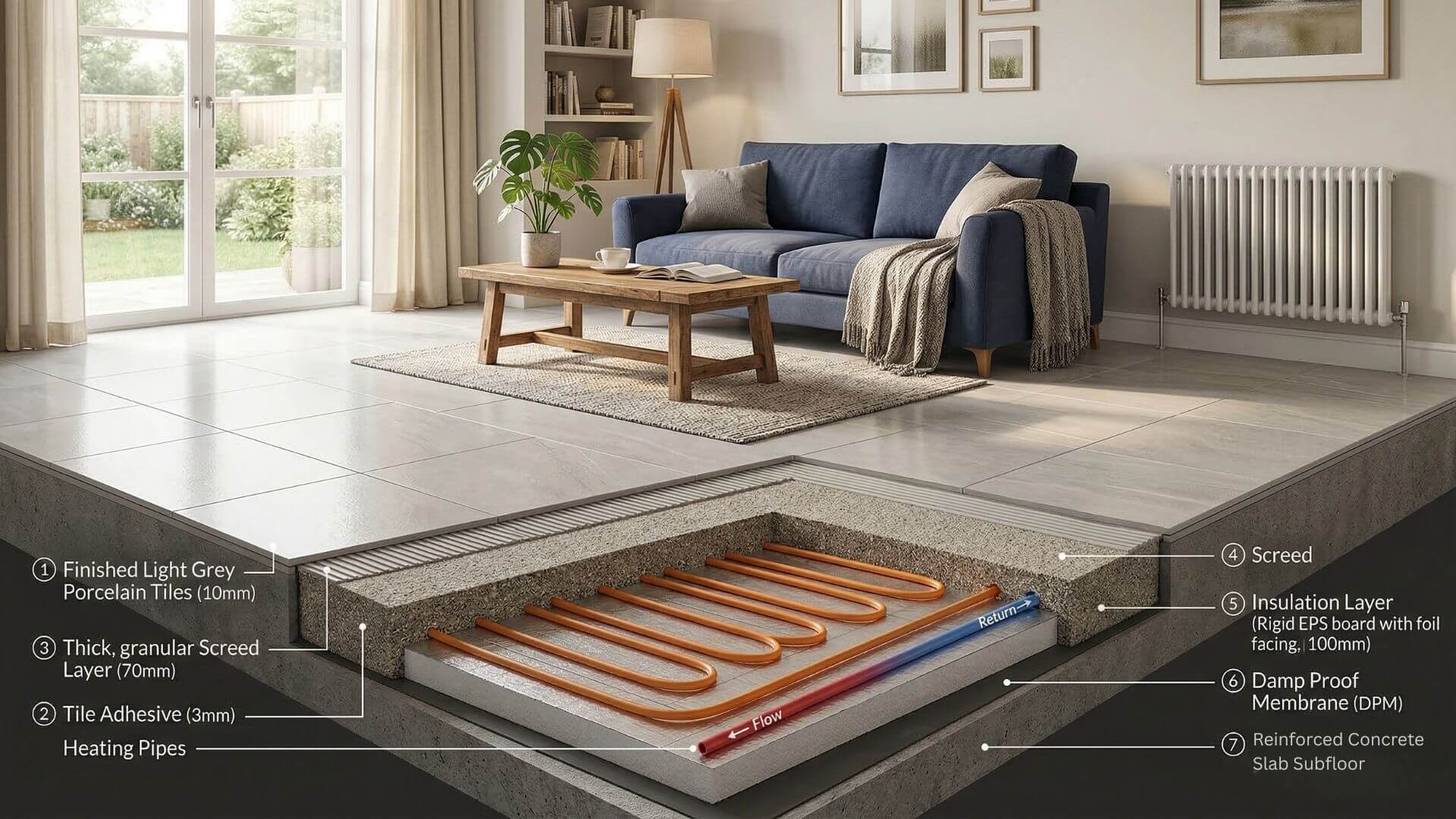
Why Tiles Are the Best Flooring Choice for Underfloor Heating
The key to underfloor heating performance is thermal conductivity: how efficiently heat travels from the system below to the surface above. Tiles outperform every other common floor covering in this regard.
Here is how the main flooring types compare in heat output over a UFH system:
| Flooring Type | Approximate Heat Output |
| Ceramic tiles and stone | 71 W/m2 |
| Vinyl and LVT | 68 W/m2 |
| Engineered wood | 56 W/m2 |
| Carpet (2 tog) | 48 W/m2 |
Tiles sit at the top of this table for a straightforward reason: they are dense, solid materials with no trapped air pockets. Heat passes through them efficiently and radiates evenly across the surface. Carpet, by contrast, acts as an insulating layer that significantly reduces the amount of heat reaching the room.
Beyond thermal performance, tiles bring additional advantages in rooms with UFH:
- They are hygienic and easy to maintain, with no fibres to trap dust or allergens
- They are water resistant, making them ideal for bathrooms and kitchens where UFH is most commonly installed
- They do not warp, swell, or degrade under repeated heating and cooling cycles
- Tile Basket’s porcelain and ceramic tiles carry a no moisture expansion rating, meaning they remain dimensionally stable as temperatures fluctuate
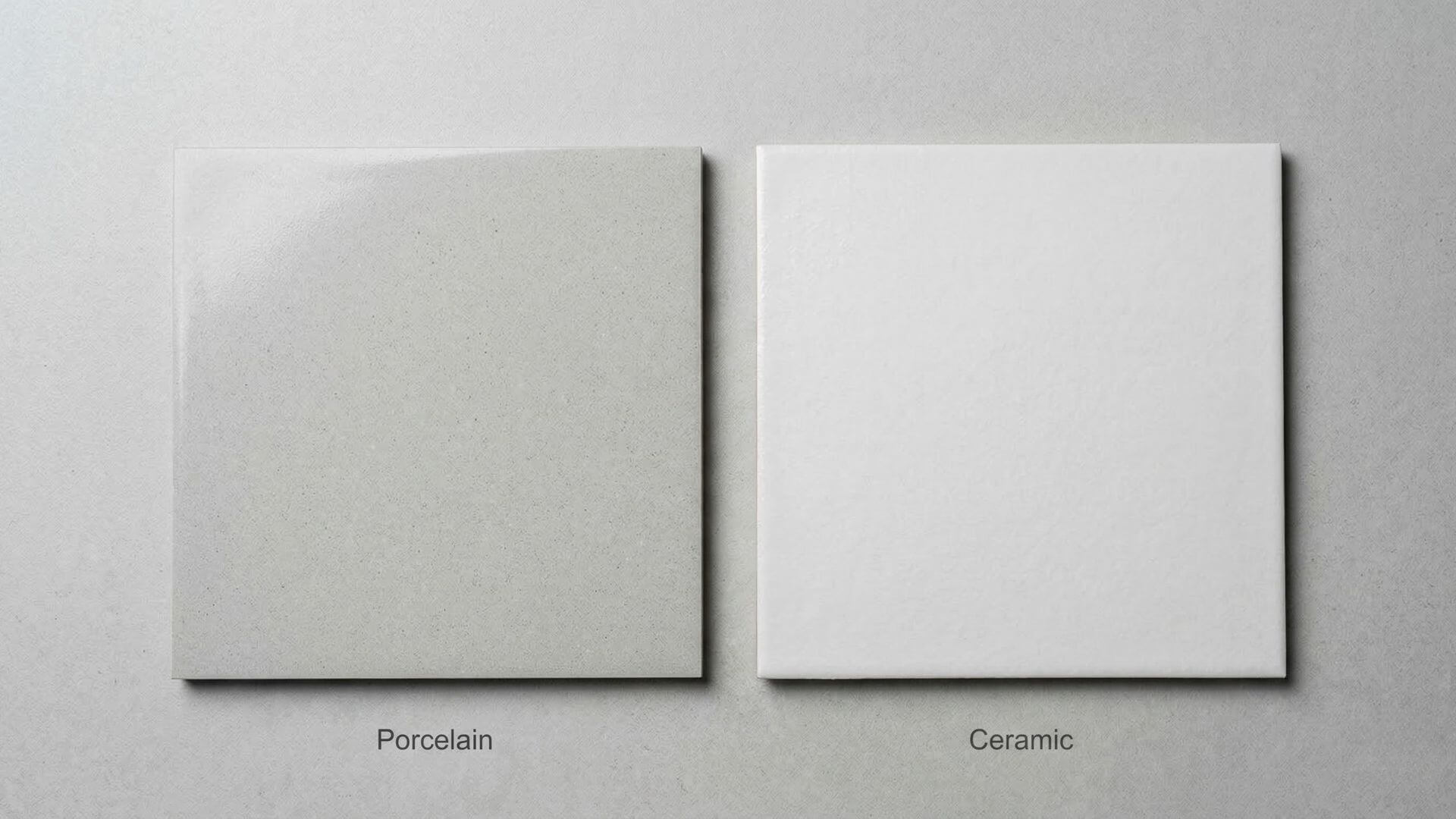
Porcelain vs Ceramic Tiles for Underfloor Heating: Which is Better?
Both porcelain and ceramic tiles are fully compatible with underfloor heating. The difference between them comes down to density, durability, and where each performs best.
Porcelain Tiles
Porcelain tiles are fired at higher temperatures than ceramic, producing a denser, harder tile with very low water absorption. This density is an advantage with UFH: heat transfers through porcelain efficiently, and the material retains warmth well even after the heating system has cycled off.
Porcelain is the preferred choice for:
- Bathroom floors and kitchen floors where UFH is most commonly installed
- High-traffic areas where durability is a priority
- Large-format tiles, which are particularly well suited to UFH installations
- Any area where moisture is present alongside heat
Tile Basket’s porcelain range includes sizes from 30x60cm up to 120x120cm, covering both standard and large-format options. All porcelain tiles in the range carry water resistance, chemical resistance, and high durability ratings as standard.
Ceramic Tiles
Ceramic tiles are slightly less dense than porcelain but are still highly compatible with underfloor heating. They conduct heat effectively and are a practical, cost-efficient choice for wall applications and lower-traffic floor areas.
Ceramic is the preferred choice for:
- Bathroom walls and kitchen walls in rooms where the floor has UFH
- Lower-traffic living spaces
- Projects where budget is a key consideration
Porcelain Tiles vs Ceramic Tiles Comparison
| Feature | Porcelain | Ceramic |
| Thermal conductivity | Excellent | Very good |
| Water resistance | Very high | Moderate |
| Durability (floors) | High | Moderate |
| Best use with UFH | Floors, wet areas, high traffic | Walls, low-traffic floors |
| Cost | Mid to premium | Entry to mid |
For UFH floors specifically, porcelain is the stronger performer. For walls in rooms that also have a heated floor, ceramic is a practical and cost-effective choice.
Choosing Floor Tiles for Underfloor Heating
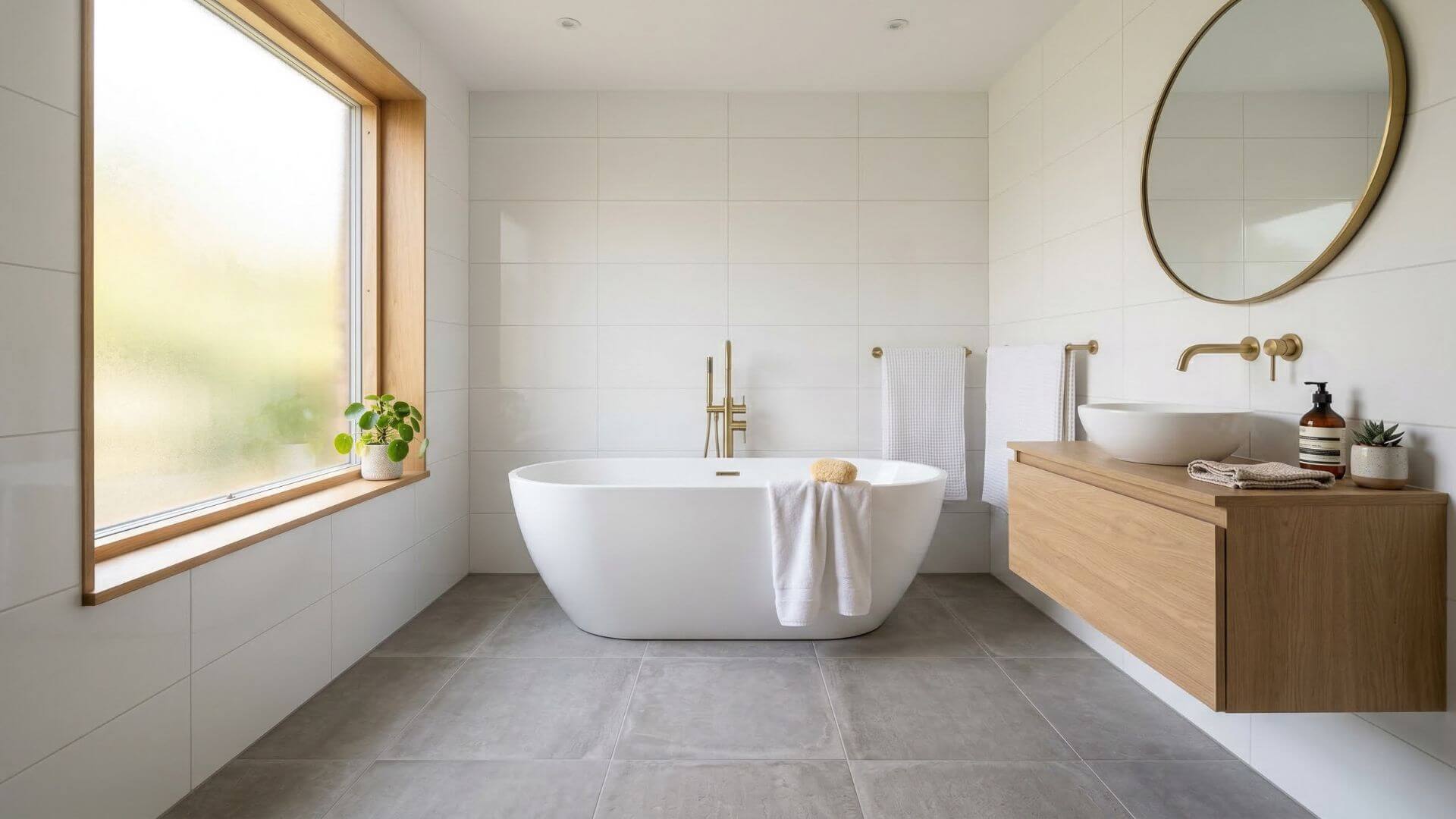
When selecting floor tiles for a room with UFH, there are five factors to consider beyond material type alone.
1. Tile Size
Large-format tiles perform particularly well over underfloor heating. Fewer grout lines mean a more even heat distribution across the surface, with less interruption to the thermal transfer from screed to tile face. A 60x120cm or 80x80cm tile will distribute heat more uniformly than a mosaic or small-format tile.
Tile Basket stocks large-format floor tiles in 60x120cm, 80x80cm, 80x160cm, and 120x120cm formats, all suitable for UFH installations.
2. Tile Finish
The finish of a tile does not significantly affect its thermal performance, but it does affect safety and practicality in the rooms where UFH is most commonly used.
- Matt and Punch Matt finishes are the best choice for heated bathroom and kitchen floors. They provide grip underfoot and conceal everyday marks effectively.
- Gloss and High Gloss finishes are better suited to walls in rooms with heated floors, where slip resistance is not a concern.
3. Tile Thickness
Standard porcelain and ceramic floor tiles in Tile Basket’s range are appropriate for UFH without modification. Excessively thick tiles or very dense natural stone can slow heat transfer slightly, but within the typical thickness range of modern porcelain tiles this is not a practical concern for domestic installations.
4. Slip Resistance
In bathrooms and kitchens where UFH is most common, slip resistance remains important. Look for tiles with a minimum R10 slip resistance rating for indoor wet areas. Tile Basket’s Punch Matt finish tiles provide enhanced grip in these environments.
5. No Moisture Expansion
Tile Basket’s porcelain and ceramic tiles carry a no moisture expansion rating as one of their 12 quality properties. This is particularly relevant for UFH applications where the floor is subject to repeated thermal cycling. Tiles that remain dimensionally stable under temperature and humidity change perform better and last longer over a heated subfloor.
Browse & buy floor tiles online in the UK to find options tested and rated for durability, water resistance, and thermal performance.
AI Image Generation Prompt: A bright, modern British bathroom with a clean, minimal aesthetic. Large-format 60x120cm mid-grey matt porcelain floor tiles laid in a straight pattern. White gloss wall tiles on surrounding walls. Freestanding white bath, brushed brass fixtures. Warm light coming through a frosted window. The floor gives a subtle sense of warmth. Interior design photography style, ultra-realistic, soft natural light.
Wall Tiles in Rooms with Underfloor Heating
This is an aspect that most guides overlook entirely: when you install underfloor heating in a bathroom or kitchen, you need to choose floor tiles and wall tiles for the same space. The wall tiles do not interact directly with the UFH system, but they play an important role in the overall design and performance of the room.
Why Wall Tiles Matter in UFH Rooms
A heated floor raises the ambient temperature of the room more effectively when the walls are also tiled. Hard tiled walls retain heat better than painted plaster or wallpaper, helping the room stay warm for longer after the system has cycled off. This is particularly noticeable in bathrooms, where tiled walls combined with a heated floor make for a significantly warmer and more comfortable space.
Coordinating Floor and Wall Tiles
For a cohesive look, choose floor and wall tiles from the same colour family. Some common approaches used in UK homes:
- Large-format grey porcelain floor tile paired with a lighter grey gloss ceramic wall tile for a tonal, contemporary bathroom
- Warm cream or beige porcelain floor tiles paired with white gloss wall tiles to keep the space bright and open
- Matt floor tiles combined with gloss wall tiles in the same tone, using the contrast in finish rather than colour to add visual interest
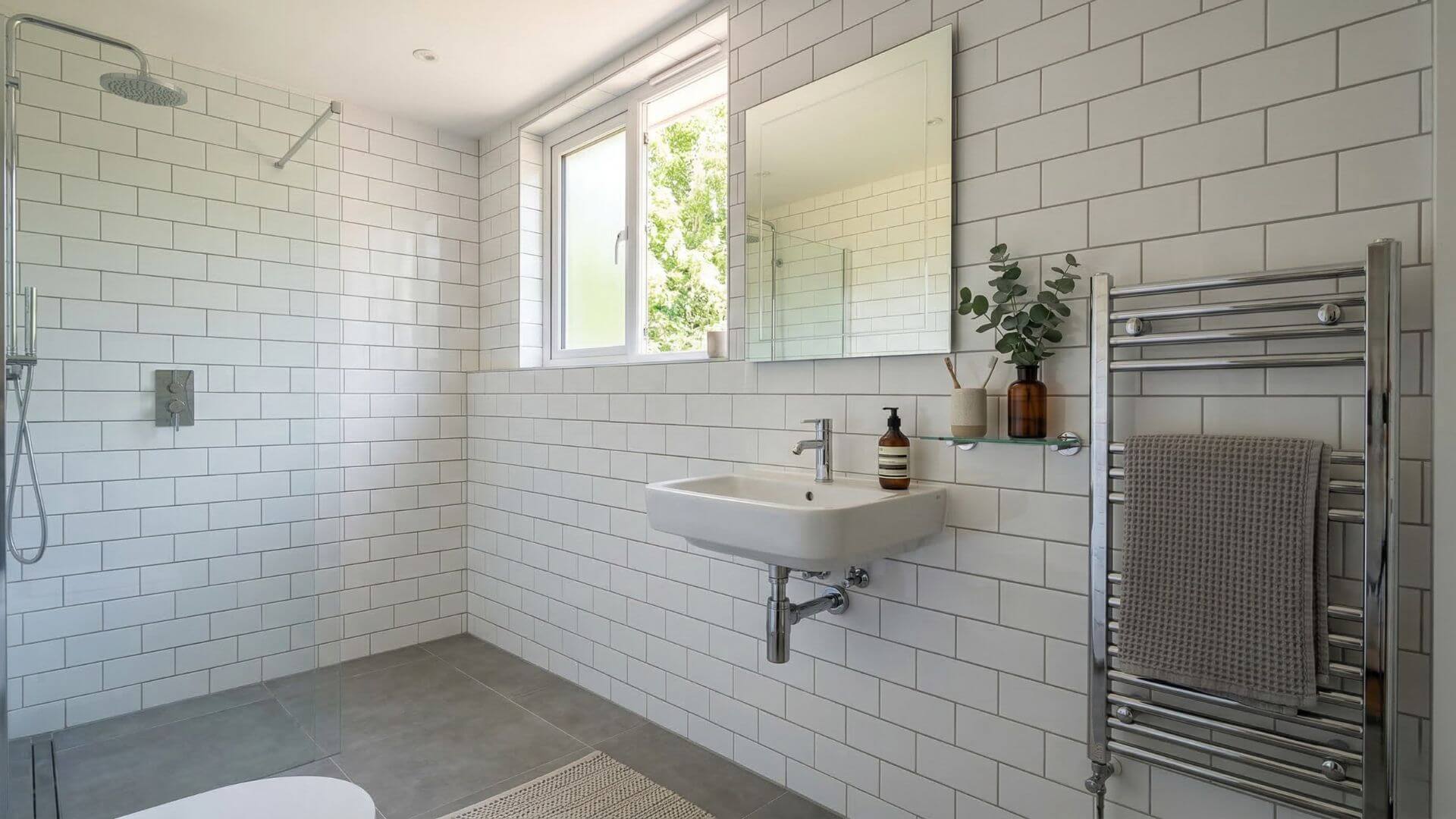
Tile Basket stocks coordinating floor and wall tile options across the same colour palette, including white, grey, cream, beige, and gold, making it straightforward to select matching or complementary tiles for both surfaces in a single order.
Buy wall tiles online in the UK and find options that complement your UFH floor tiles.
Electric vs Wet Underfloor Heating: Does Your Tile Choice Differ?
Underfloor heating in UK homes comes in two forms: electric (also called dry) and wet (hydronic). Understanding the difference helps ensure your tiles are installed correctly for either system.
Electric UFH (Cable or Mat Systems)
Electric systems use heating cables or mats laid into a self-levelling compound or tile adhesive bed directly beneath the tiles. The layer between the heating element and the tile surface is typically very thin, so heat transfer to the tile is rapid.
Tile requirements:
- Standard porcelain or ceramic tiles are fully compatible
- Ensure the tile adhesive used is rated as flexible and suitable for UFH applications
- Allow the self-levelling compound to cure fully before tiling
Wet UFH (Hydronic Systems)
Wet systems circulate warm water through pipes embedded in a screed layer. The screed takes longer to heat up and cool down than an electric system, but it retains heat for longer once warm.
Tile requirements:
- The screed must be properly commissioned before tiling (heated gradually to operating temperature, held, then cooled before tiles are laid)
- A decoupling membrane is strongly recommended to protect against movement stress as the screed expands and contracts during thermal cycling
- Flexible tile adhesive and flexible grout are required to accommodate minor movement
For both systems, Tile Basket’s porcelain and ceramic tiles are appropriate. The difference lies in the installation preparation rather than the tile itself.
Step-by-Step: How to Tile onto Underfloor Heating
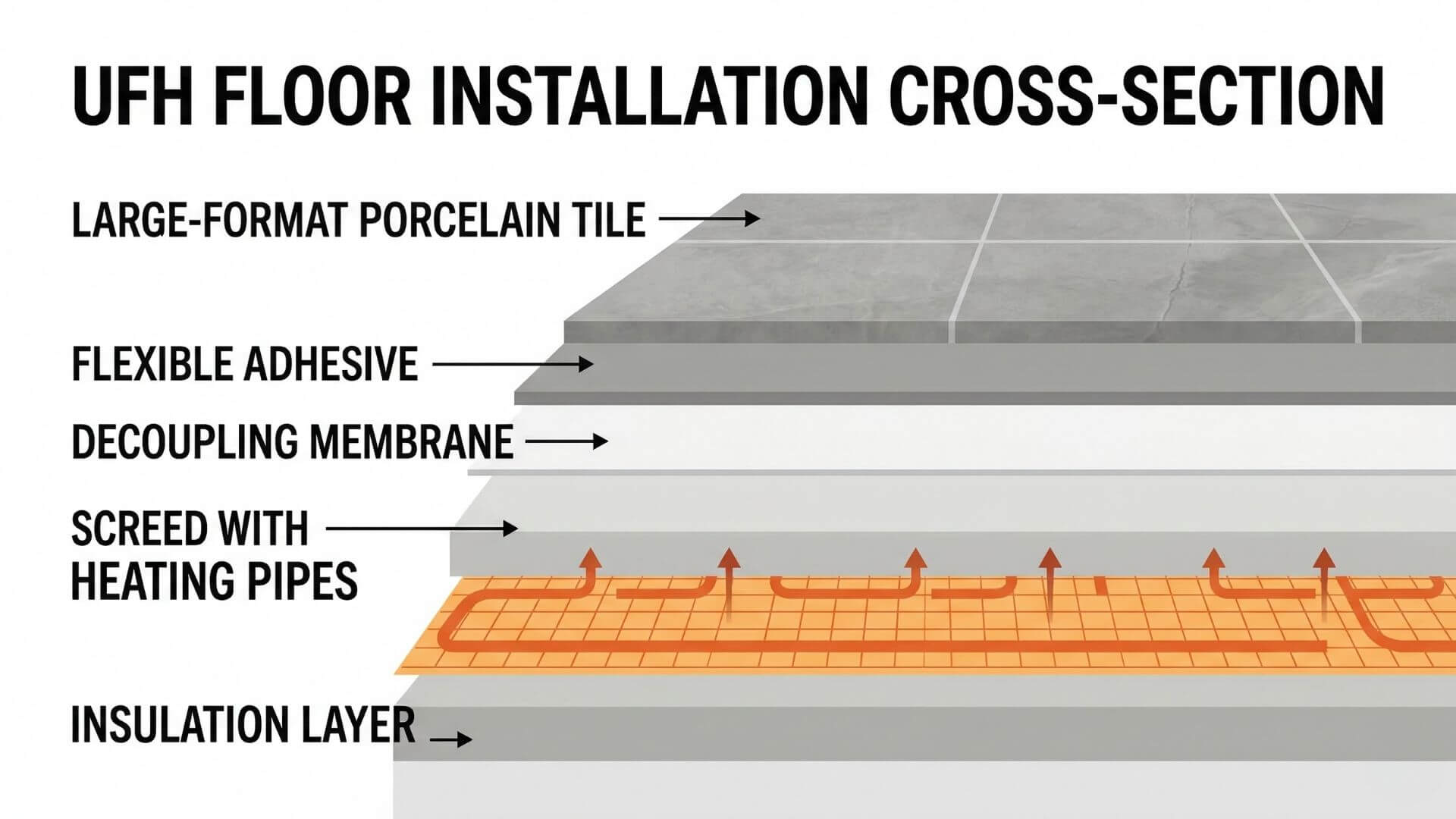
Whether you are working with an electric or wet UFH system, follow these steps to ensure a successful installation.
1. Commission your UFH system first (wet systems only)
Before tiling, a wet UFH system must be commissioned: heated gradually to operating temperature, held at that temperature for several days, then cooled back to room temperature. Do not tile onto a screed that has not been commissioned.
2. Turn off the UFH before tiling
Switch off the underfloor heating at least 48 to 72 hours before tiling begins. The subfloor should be at room temperature throughout the installation process. Heat accelerates adhesive curing in a way that can compromise the bond.
3. Check the subfloor
The subfloor must be flat, clean, and structurally sound. Any high spots or hollows should be addressed with a self-levelling compound before tiling begins. An uneven subfloor puts stress on tiles and grout joints during thermal cycling.
4. Install a decoupling membrane (recommended)
A decoupling membrane separates the tile layer from the subfloor, absorbing the movement stress that occurs as the floor heats and cools. This is the single most effective way to prevent tile cracking over a UFH system and is strongly recommended for large-format tiles.
5. Use flexible tile adhesive
Standard rigid adhesives are not appropriate for UFH installations. Use a flexible tile adhesive throughout, as this accommodates the minor expansion and contraction that occurs during heating and cooling cycles.
6. Include expansion joints
Expansion joints should be incorporated at regular intervals across the tiled area, at perimeter edges, and at any change of plane. These joints allow the floor to move slightly without transmitting stress to the tiles.
7. Allow adhesive to cure fully before grouting
Follow the adhesive manufacturer’s guidance on curing time before grouting. Do not rush this stage.
8. Use flexible grout
Flexible grout is essential for UFH applications. Standard rigid grout can crack as the floor moves through temperature cycles.
9. Wait before turning the heat back on
Once tiling and grouting are complete, wait at least 7 to 10 days before reactivating the UFH system. When you do turn it back on, start at a low setting and increase the temperature gradually over several days rather than jumping straight to full output.
Common Mistakes to Avoid
Tiling over a cold or unconditioned screed
Wet UFH screeds must be fully commissioned before tiling. Tiling onto a screed that has not gone through the full heat-up and cool-down cycle can lead to movement, tile lifting, and cracking.
Using rigid adhesive
Rigid adhesive does not accommodate the natural movement of a heated floor. Always use a flexible adhesive rated for UFH applications.
Skipping expansion joints
Omitting expansion joints is one of the most common causes of tile failure on heated floors. They are not optional.
Turning the heat on too soon
Impatience after installation is costly. Allow the full curing period before reactivating the system.
Choosing a tile finish that is unsafe underfoot
High gloss tiles on a heated bathroom floor are a safety risk. Choose a matt or textured finish for any floor in a wet or high-humidity environment.
Frequently Asked Questions
Are all tiles suitable for underfloor heating?
Most ceramic and porcelain tiles are fully compatible with underfloor heating. Natural stone such as marble and limestone can also be used but requires sealing. Very thick or highly insulating materials are less effective. Tile Basket’s porcelain and ceramic ranges are all suitable for UFH applications.
Is porcelain or ceramic better for underfloor heating?
Both work well. Porcelain is the stronger performer for floor applications due to its higher density, lower water absorption, and superior durability. Ceramic is a practical and cost-effective option for walls in rooms with heated floors.
Do I need a special adhesive for tiles on underfloor heating?
Yes. Always use a flexible tile adhesive for UFH installations. Standard rigid adhesives do not accommodate the thermal movement of a heated floor and can fail over time.
Can I use large-format tiles on underfloor heating?
Yes, and large-format tiles often perform better on UFH than smaller formats. Fewer grout lines mean more even heat distribution across the surface. Tile Basket stocks large-format options up to 120x120cm, all suitable for UFH installations.
How long should I wait before turning on underfloor heating after tiling?
Allow at least 7 to 10 days after tiling and grouting before reactivating the system. When you do switch it on, increase the temperature gradually over several days rather than immediately running it at full output.
Do I need a decoupling membrane?
It is strongly recommended, particularly for wet UFH systems and large-format tiles. A decoupling membrane absorbs the movement stress caused by thermal cycling and significantly reduces the risk of tile cracking.
What slip resistance rating do I need for a heated bathroom floor?
R10 is the minimum recommended rating for indoor wet area floors in the UK. Tile Basket’s Punch Matt finish tiles provide enhanced grip and are well suited to heated bathroom floors.
Can I use the same tiles on the floor and the wall in a room with underfloor heating?
Yes. If the tile is rated for floor use, it can be used on walls too. Tile Basket stocks coordinated floor and wall tile options across the same colour palettes, making it easy to achieve a consistent look throughout the room.
Ready to Choose Your Tiles for Underfloor Heating?
Tiles are the most efficient, durable, and practical floor covering for any underfloor heating system. Whether you are fitting a heated bathroom floor, a kitchen with radiant heat, or a living room with a wet UFH system, Tile Basket has porcelain and ceramic tiles to suit your project.
As one of the UK’s most trusted tile suppliers, we offer transparent pricing per square metre, sample ordering, and free delivery options across the rest of the UK.