
The Complete Tile Selection Guide for UK Homes
February 20, 2026
Choosing the right tiles can feel overwhelming. Walk into any tile showroom or browse online and you will be met with dozens of materials, hundreds of finishes, and sizes ranging from small mosaics to large-format slabs. Knowing which option suits your project, your budget and your lifestyle makes the difference between a result you love and one you simply live with.
This guide covers everything you need to know: tile types, finishes, sizes, room-by-room recommendations, slip resistance ratings, and maintenance tips. Whether you are renovating a bathroom, refreshing a kitchen, tiling a living room floor, or updating an outdoor patio, you will find practical, straightforward advice to help you choose with confidence.
As one of the leading tile suppliers in the UK, Tile Basket stocks a wide range of ceramic, porcelain, and specialist tiles for every room in your home, with fast delivery across the country.
What Type of Tile Should You Choose?
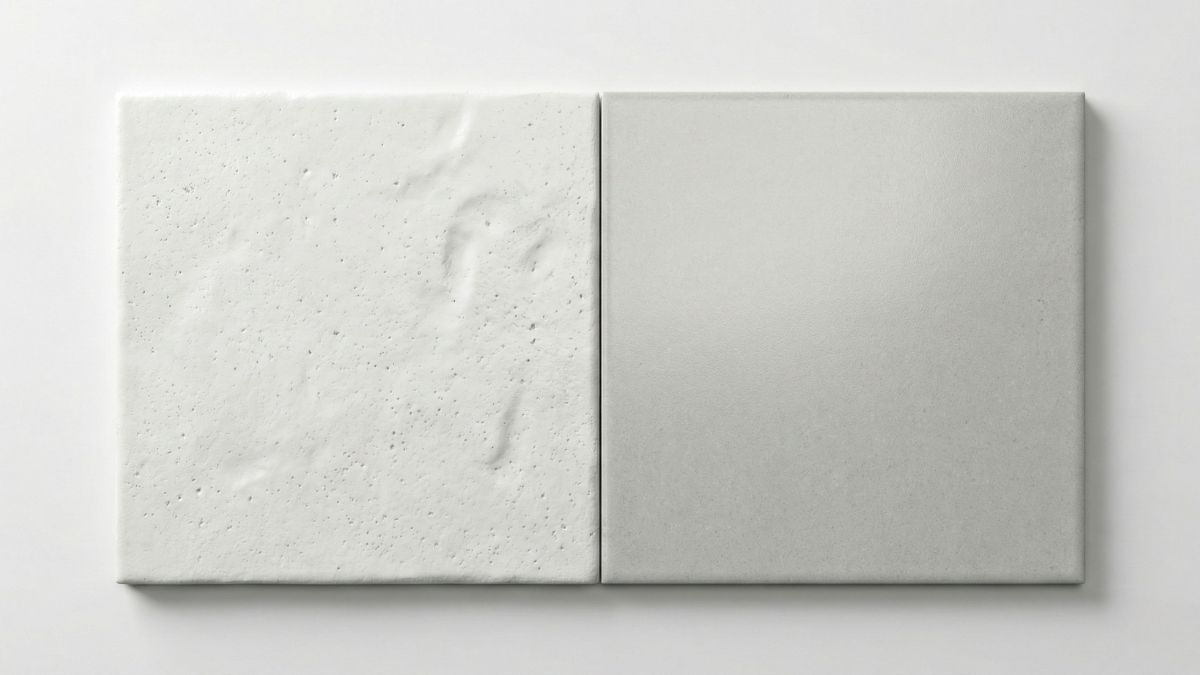
The material you choose affects durability, maintenance, appearance and cost. Here is a breakdown of the most common tile types available in the UK.
Ceramic Tiles
Ceramic tiles are made from clay fired at moderate temperatures. They are cost-effective, lightweight, and straightforward to cut and install, making them a popular choice for wall applications. Ceramic is well suited to bathrooms, kitchens, and low-traffic areas. It is slightly more porous than porcelain, so it is best used on walls rather than busy floors.
- Best for: Bathroom walls, kitchen splashbacks, low-traffic areas
Porcelain Tiles
Porcelain is fired at higher temperatures than ceramic, producing a denser, harder tile with very low water absorption. This makes it highly resistant to moisture, staining, frost, and heavy wear. Porcelain tiles work equally well on floors and walls, indoors and outdoors. If you want one tile type that can handle the demands of modern family life, porcelain is the most versatile option available.
- Best for: Floors, wet areas, high-traffic spaces, outdoor use
Natural Stone Tiles
Marble, slate, limestone and granite all offer a timeless, luxury aesthetic that cannot be fully replicated by manufactured tiles. Natural stone requires sealing and slightly more ongoing care, but it rewards that attention with character and longevity that appreciates over time.
- Best for: Feature walls, luxury bathrooms, hallways, statement floors
Glass Tiles
Glass tiles are light-reflective and striking, lending themselves to accent walls, splashbacks, and mosaic features. They are not suitable for floor use. Where light is limited, glass tiles can add a sense of depth and brightness that transforms a space.
- Best for: Feature walls, bathroom accents, kitchen splashbacks
Mosaic Tiles
Mosaic tiles are small individual tiles, often sold on mesh-backed sheets for easier installation. They allow creative pattern work and are an excellent choice for curved surfaces, shower trays, and decorative borders. They come in ceramic, porcelain, glass, and natural stone options.
- Best for: Shower areas, borders, feature panels
Choosing Tiles by Room
Different rooms place different demands on tiles. Here is what to consider for each space in your home.
Bathroom Tiles
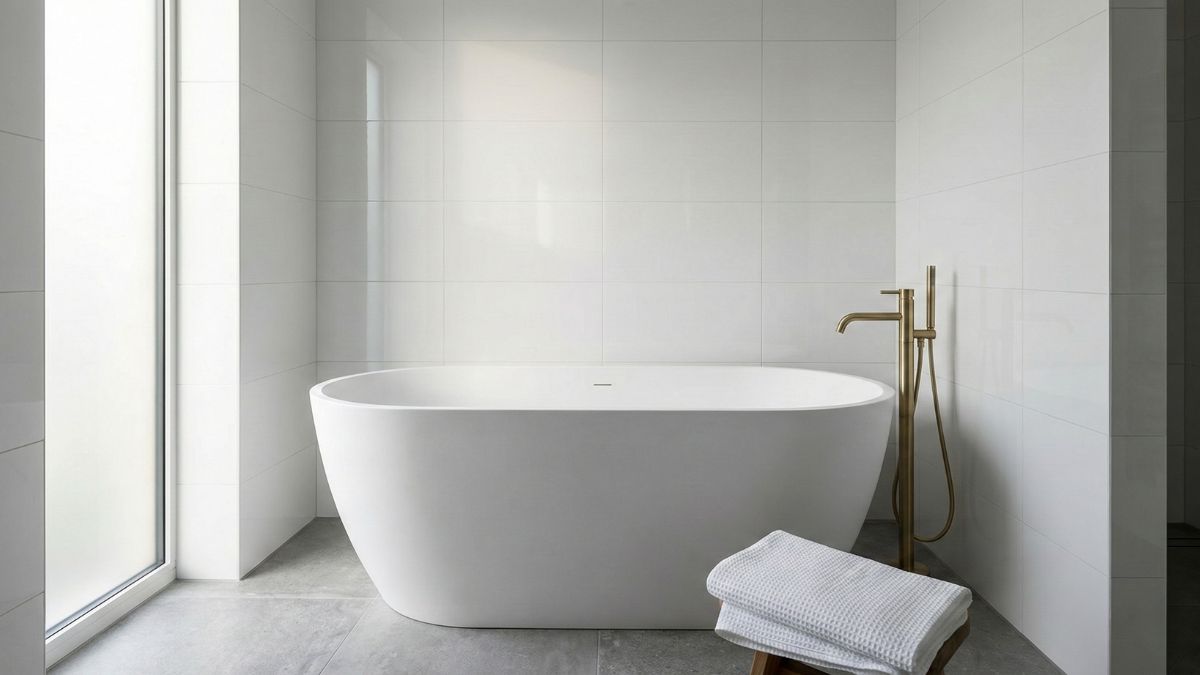
Bathrooms need tiles that handle consistent moisture, humidity, and underfoot safety. Slip resistance is a priority for floors, and a finish that repels water and is easy to wipe clean is essential for walls.
Porcelain is the preferred material for bathroom floors due to its near-zero water absorption. For walls, both ceramic and porcelain work well. A gloss or high gloss finish brightens a smaller bathroom and reflects light effectively. If your bathroom has limited natural light, lighter tones in white, cream, or soft grey will help the room feel more open.
For shower areas, choose tiles rated R10 or above for floors. Ensure grout lines are sealed properly to prevent moisture penetration.
Browse our full range of bathroom tiles to find options for every bathroom style, from classic to contemporary.
Kitchen Tiles
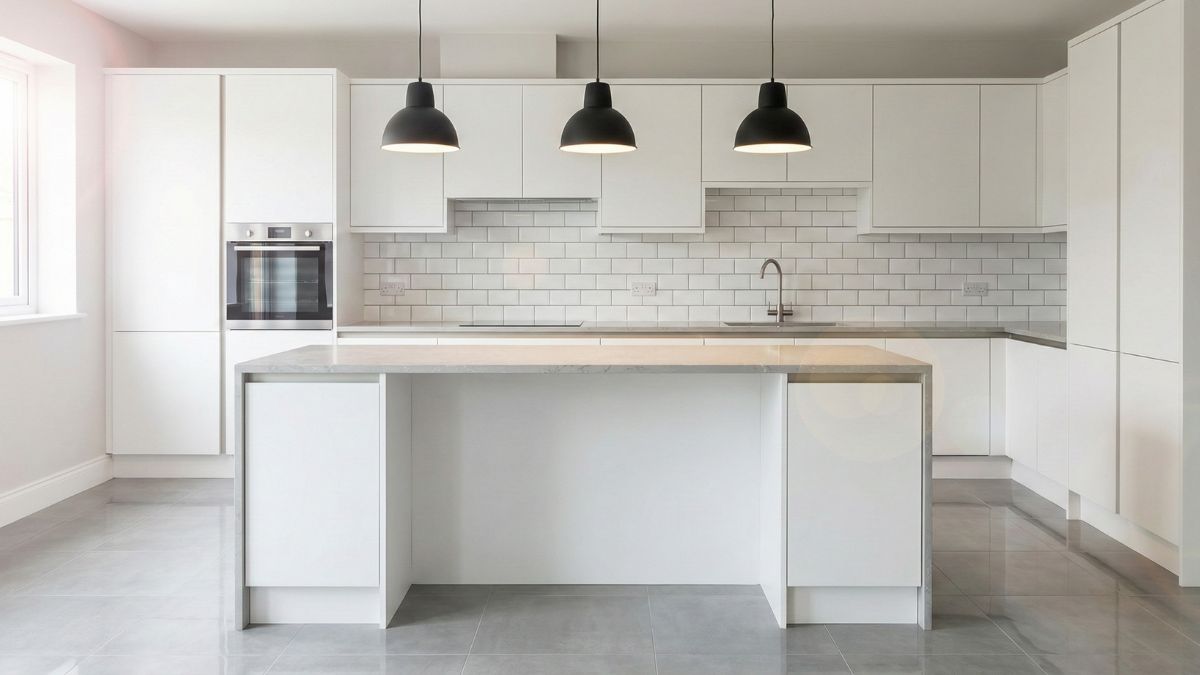
Kitchen tiles must stand up to splashes, steam, grease, food stains, and heavy daily use. For kitchen floors, choose porcelain with a matt or punch matt finish that provides grip and conceals everyday marks. For kitchen walls and splashbacks, the options open up considerably.
Gloss ceramic tiles are a popular choice for kitchen walls because they are easy to wipe clean and reflect light from the cooking area. Large-format porcelain on the floor creates a sleek, seamless look that suits modern kitchens particularly well. Wood-effect porcelain is another strong choice for kitchens, offering the warmth of a timber aesthetic with the practicality of a tile.
If you are looking to buy kitchen tiles online in the UK, Tile Basket’s range of kitchen tiles covers everything from understated neutrals to bold statement finishes.
Living Room Tiles
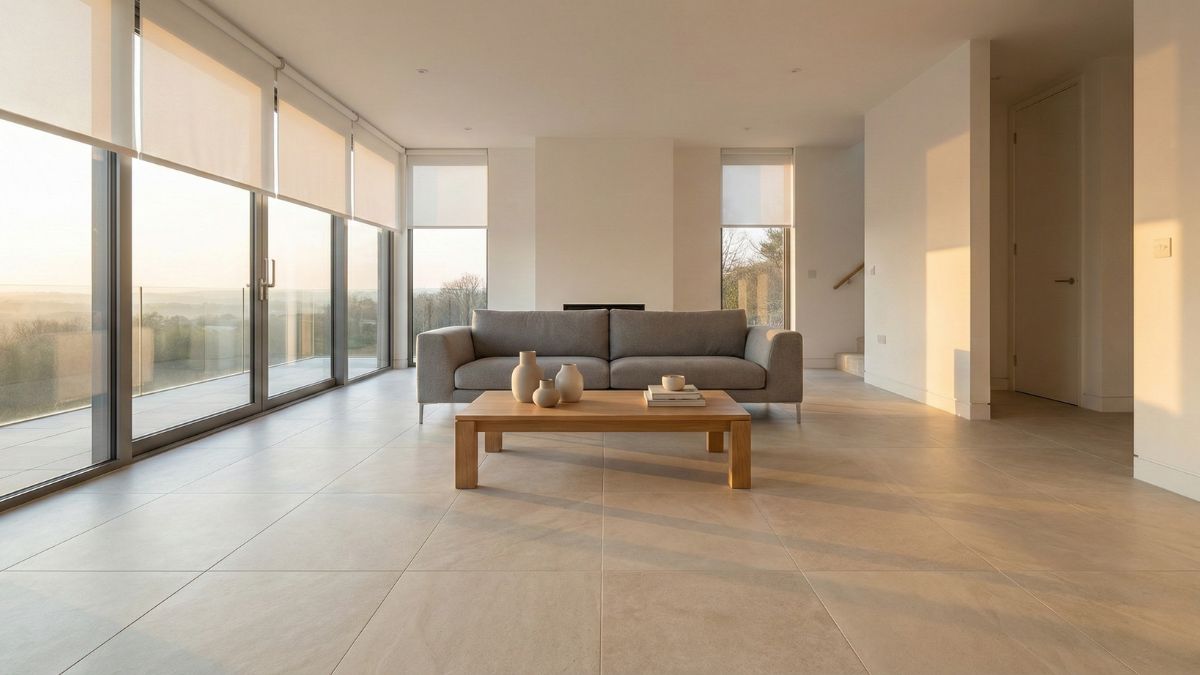
The living room is where tiles can make their biggest design statement. With no requirement for heavy-duty water resistance, you have more freedom to explore finishes, formats, and styles.
Large-format porcelain tiles in a straight lay create a sense of space and continuity, particularly in open-plan layouts. Matt finishes are the most practical choice for living room floors as they conceal dust and footprints more effectively than gloss. If you have underfloor heating, porcelain is an excellent conductor and fully compatible with most systems.
For a warmer feel, stone-effect porcelain tiles in beige, cream, or sandstone tones work beautifully in traditional and period properties. In contemporary settings, large grey or charcoal tiles with minimal grout lines achieve a clean, modern look.
Explore our range of living room tiles in UK to find the right style for your space.
Outdoor Tiles
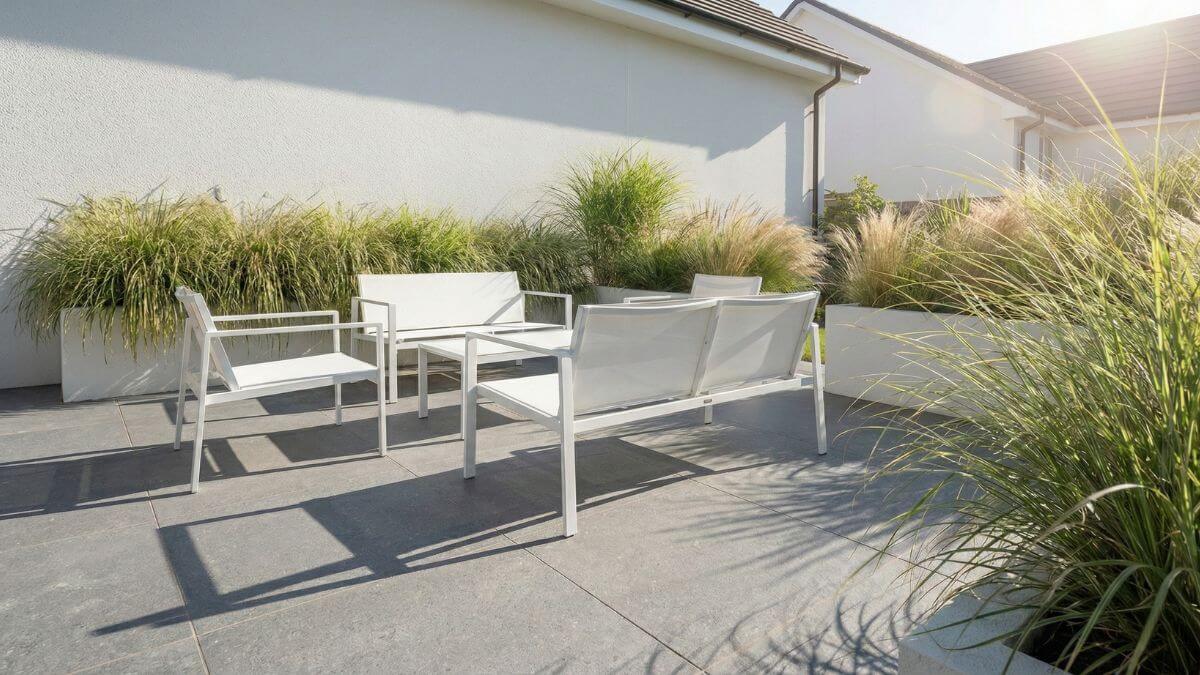
Outdoor tiles face conditions that no indoor tile is built to withstand: frost, standing water, UV exposure, and the risk of slipping on a wet surface. Not every tile is suitable for outdoor use, and choosing the wrong one can lead to cracking and failure within a single winter.
For UK gardens, patios, and external steps, choose porcelain tiles that are frost resistant, carry a water absorption rate below 0.5%, and hold an R11 anti-slip rating. R11 is the highest recommended standard for external ground-level surfaces and provides excellent grip even in wet conditions.
Tile Basket stocks a dedicated range of outdoor tiles in UK in 20mm thickness, specifically designed for ground-level external use. All carry an R11 rating and are frost resistant as standard.
Floor Tiles vs Wall Tiles: What is the Difference?
| Criteria | Floor Tiles | Wall Tiles |
| Primary Purpose | Designed to handle foot traffic and weight | Designed mainly for vertical surfaces |
| Strength & Density | Denser and thicker for load-bearing | Thinner and lighter |
| Durability | High resistance to abrasion and wear | Lower durability compared to floor tiles |
| Slip Resistance | Comes with slip resistance ratings for safety | Typically no slip resistance rating |
| Usage Flexibility | Can usually be used on both floors and walls | Should not be used on floors |
| Risk if Misused | Safe for wall application | May crack under load if used on floors |
| Best for Seamless Look | Choose floor-rated tiles for both floor and wall use | Not recommended for dual use |
Browse our range of tiles to buy floor tiles online and wall tiles to find the right option for your project.
Tile Finishes Explained
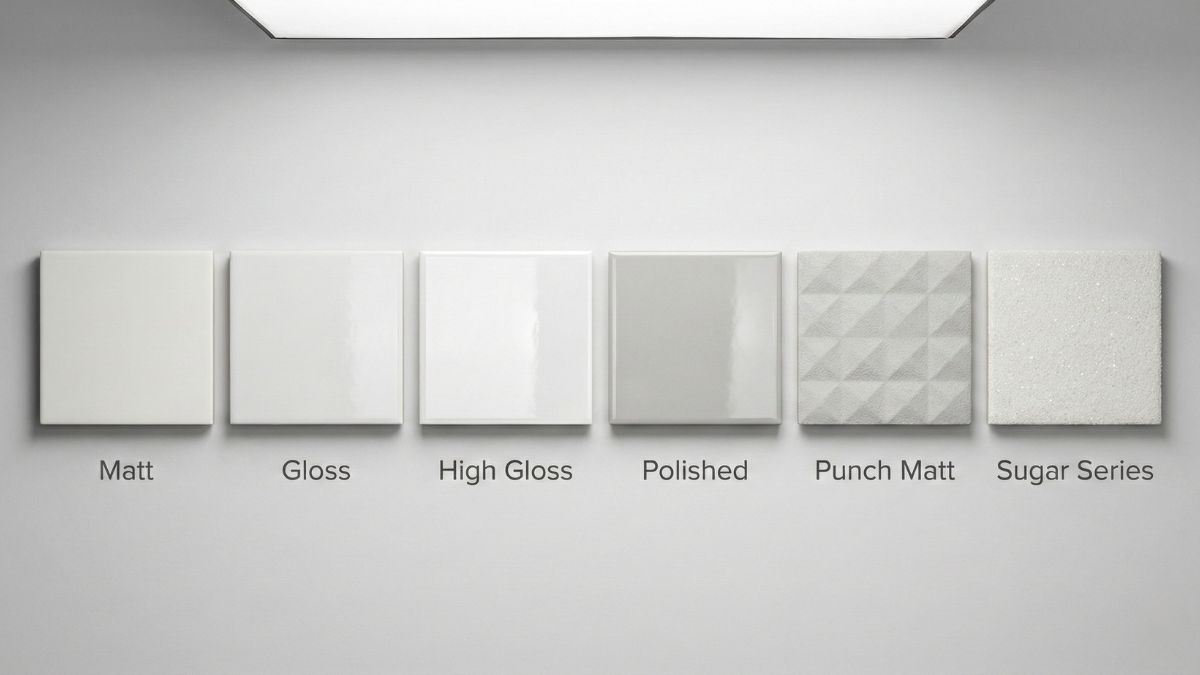
The finish of a tile affects both its appearance and its practical performance. Here are the main finishes you will encounter.
Matt: A non-reflective surface that creates a soft, understated look. Matt tiles are practical for floors as they conceal dust, footprints and watermarks more easily than gloss. They are the most popular finish for living rooms and low-maintenance bathrooms.
Gloss: A shiny, light-reflective surface that brightens spaces and creates a crisp, clean aesthetic. Best used on walls rather than floors due to the risk of slipping when wet. Particularly effective in smaller bathrooms and kitchens.
High Gloss: A near mirror-like finish that amplifies light and creates a sense of luxury. Ideal for feature walls and premium bathroom installations.
Polished: A smooth, highly refined surface associated with natural stone aesthetics. Creates a sense of depth that works well in large-format floor tiles.
Textured / Punch Matt: A surface with tactile variation that provides additional grip underfoot. A practical and stylish choice for floors in wet areas and kitchens.
Sugar Series: A softly crystalline finish that sits between matt and gloss. Tile Basket’s Sugar Series tiles offer a refined shimmer effect that works beautifully as feature walls or statement floors.
Tile Sizes and How They Affect Your Space
The size of the tile you choose has a significant impact on how the finished room feels.
- Large-format tiles (60x60cm and above) create fewer grout lines, which makes a room feel more spacious and seamless. They are particularly effective in open-plan areas and hallways. Popular large formats include 60x120cm, 80x80cm, 80x160cm, and 120x120cm.
- Standard formats (30x60cm, 60x60cm) are versatile and widely used across all room types. They are easier to handle during installation and work well in medium-sized rooms.
- Small tiles and mosaics add visual texture and a more traditional or artisan aesthetic. They work well in shower areas, as feature panels, and in smaller spaces where a large tile might feel overwhelming.
As a general principle, a larger tile in a small room can actually make the space feel bigger by reducing visual fragmentation. Do not be deterred from using a 60x120cm tile in a compact bathroom; it often produces a more impressive result than smaller tiles.
Understanding Slip Resistance: R Ratings Explained
The R rating system measures slip resistance underfoot. It is an essential consideration for any floor tile, particularly in wet or outdoor environments.
| Rating | Recommended Use |
| R9 | Light commercial, dry residential floors |
| R10 | Bathrooms, kitchens, indoor wet areas |
| R11 | External ground-level surfaces, outdoor patios, steps |
For domestic bathrooms and kitchens in the UK, R10 is the standard minimum recommendation. For outdoor tiles, always choose R11. Tile Basket’s outdoor range is R11 rated as standard.
Durability: Understanding PEI Ratings
The PEI (Porcelain Enamel Institute) rating classifies how much wear a tile can handle. It applies primarily to glazed tiles.
| PEI Rating | Suitable For |
| Class 1 | Walls only |
| Class 2 | Low-traffic residential floors |
| Class 3 | Most residential floors |
| Class 4 | Heavy residential, light commercial |
| Class 5 | High-traffic commercial environments |
For most UK homes, a PEI Class 3 or 4 tile provides more than adequate durability on residential floors. Hallways and kitchens benefit from Class 4 where possible.
Popular Tile Styles and Current UK Trends
Beyond material and finish, style plays a major role in tile selection. Here are the styles currently popular in UK homes.
Wood-effect tiles: Porcelain tiles that replicate the look of timber planks. They offer all the durability and water resistance of porcelain with the warmth of a wood aesthetic. Ideal for kitchens, living rooms, and hallways.
Stone-effect tiles: Marble, concrete, and travertine effects in porcelain are among the most popular choices in UK interior design. They deliver a high-end look at a fraction of the cost of real stone, with none of the maintenance demands.
Subway tiles: Rectangular tiles, traditionally 10x20cm or similar, laid in a brick pattern with prominent grout lines. A timeless choice for kitchen splashbacks and bathroom walls.
Patterned tiles: Geometric and encaustic-inspired patterns are growing in popularity in UK bathrooms and kitchen floors. They add personality and can serve as a focal point in an otherwise neutral room.
Large grey tiles: Consistent with contemporary British interior trends, large-format grey porcelain tiles remain one of the most searched and purchased styles across all room types.
Tile Maintenance and Cleaning
Tiles are one of the easiest surfaces to maintain, but a few basic habits make a significant difference to how they look long-term.
- Sweep or vacuum floor tiles regularly to remove grit before it scratches the surface
- Use a pH-neutral, tile-safe cleaner for routine mopping
- Wipe spills promptly, especially on lighter-coloured tiles
- Seal natural stone tiles and porous grout lines once installed and reseal annually
- Avoid steam cleaners on unsealed grout or natural stone tiles
- Clean grout lines with a soft brush and a mild cleaning solution to prevent discolouration
Porcelain and glazed ceramic tiles are straightforward to maintain and do not require sealing. Natural stone requires more attention but rewards it with lasting beauty.
How to Calculate How Many Tiles You Need
To calculate the number of tiles needed for a room, follow these steps:
- Measure the length and width of the area in metres
- Multiply length by width to get the total square metreage
- Add 10% to account for cuts, wastage, and future replacements
- Divide the total by the coverage per box (shown on each product page)
For example: a bathroom floor that is 2m x 3m = 6 square metres. With 10% wastage, order at least 6.6 square metres of tiles.
Tile Basket lists prices per square metre transparently on every product page, making it straightforward to calculate your total material cost before ordering.
Frequently Asked Questions
What is the difference between ceramic and porcelain tiles?
Porcelain is fired at higher temperatures and is denser, harder, and less porous than ceramic. Porcelain is suitable for both floors and walls including outdoor use. Ceramic is better suited to walls and lower-traffic indoor areas.
Can I use floor tiles on walls?
Yes. Floor-rated tiles can be used on walls. Wall-rated tiles cannot be used on floors.
Do I need to seal porcelain tiles?
Glazed porcelain does not need sealing. Unglazed or natural stone tiles do require sealing on installation and periodically thereafter.
What slip resistance do I need for a bathroom floor?
A minimum R10 rating is recommended for domestic bathroom floors in the UK. For outdoor use, choose R11.
What size tiles work best in a small bathroom?
Contrary to common belief, large-format tiles often make a small bathroom look bigger by reducing the number of grout lines. 60x60cm or 60x120cm tiles are frequently used in compact bathrooms to excellent effect.
Are porcelain tiles suitable for underfloor heating?
Yes. Porcelain is an excellent conductor of heat and is one of the most compatible materials for use with underfloor heating systems.
How do I order tiles online in the UK?
You can browse and buy tiles online in the UK with Tile Basket
What is the best tile for an outdoor patio in the UK?
Choose frost-resistant porcelain tiles with a water absorption rate below 0.5% and an R11 anti-slip rating. All outdoor tiles in the Tile Basket range meet these specifications as standard.
Can I get tile samples before ordering?
Yes. Sample ordering is available through Tile Basket’s website so you can check colour, finish, and texture in your own home before committing to a full order.
Ready to Choose Your Tiles?
Whether you are searching for bathroom tiles, kitchen tiles, living room tiles, or outdoor tiles for your garden, Tile Basket has a comprehensive range to suit every style and budget.
As trusted tile suppliers serving London and the whole of the UK, we offer transparent pricing per square metre, fast delivery, and sample ordering so you can shop with complete confidence.